
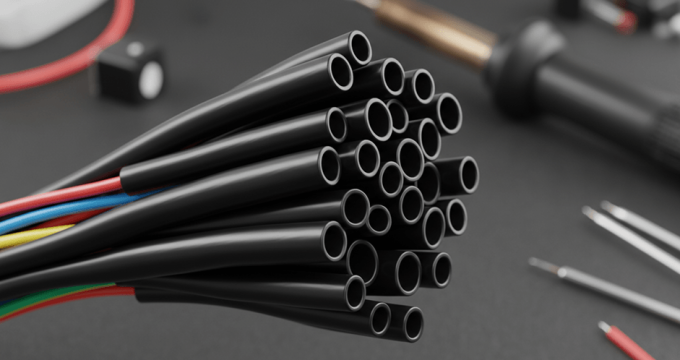
With its superior flexibility and broad range of operating temperatures, polyolefin heat shrink tubing is a popular choice for wire management and insulation. Learn more about the advantages of polyolefin over other common tubing materials like Teflon™ and PVC.
Key Characteristics & Benefits of Polyolefin Tubing
Polyolefin is one of the most commonly used heat shrink materials for electrical and mechanical applications. With a wide range of colors and heat shrink ratios, polyolefin is an excellent choice if you need to color-code and protect sensitive electrical components.
Heat Resistance & Flame Retardancy
The ability to withstand high heat and exposure to flame are two standout characteristics of polyolefin that make the material a popular choice for electrical applications. Polyolefin heat shrink tubing has an operating range of -55°C to 135°C, with shrink typically happening around 90°C.
Flexibility & Durability
Polyolefin's flexibility and superior strain resistance make it ideally suited for wire splices, connections, and harnesses. The material can easily bend, stretch, and twist without tearing or losing its shape, and it's significantly more flexible than PVC or Teflon tubing.
Heat Shrink Ratios
Our polyolefin heat shrink tubing is available in standard 2:1 and 3:1 shrink ratios, as well as larger 4:1 and 6:1 ratios for insulating irregularly shaped objects or complex connectors. If you need to accommodate nonstandard shapes or large connector-to-cable size differences, polyolefin is your best choice because of its higher shrink ratios compared to other materials.

Polyolefin vs. Other Common Heat Shrink Tubing Materials
Two common alternatives to polyolefin heat shrink tubing are polyvinyl chloride (PVC) and polytetrafluoroethylene (PTFE, branded as Teflon). Choosing between these options comes down to key qualities like temperature resistance, chemical resistance, and durability.
Polyolefin vs. PVC Heat Shrink Tubing
Polyolefin is more flexible, durable, and temperature-resistant than PVC. Affordability and customizability are where PVC shines, with a lower price point than polyolefin and a wider range of color options. However, PVC has a tendency to become brittle and doesn't offer near the level of durability or flexibility you can expect from polyolefin in critical applications.
Polyolefin vs. PTFE (Teflon) Heat Shrink Tubing
PTFE (Teflon™) offers superior chemical and temperature resistance with a temperature range of -400°F to 500°F. However, polyolefin heat shrink tubing offers faster shrinking at lower temperatures (90°C). PTFE is also less flexible and more expensive than polyolefin.
Comparing Polyolefin vs. PVC vs. Teflon At a Glance
Your choice of heat shrink material ultimately comes down to your intended application. All of our heat shrink tubing is highly versatile, but the following list breaks down the key differences and common applications of polyolefin, PVC, and Teflon:
- Best for insulation: Polyolefin. Polyolefin heat shrink tubing is highly flexible and flame-retardant, and it offers a very low shrink temperature. These qualities make it ideal for high-voltage electrical applications like wire splices, wire harnesses, and color coding for wires, cables, and parts.
- Best for general use: PVC. PVC offers excellent resistance to abrasion and chemicals, but it's not as durable as other options.
- Best for demanding conditions: Teflon. Teflon provides the best high-temperature performance, lubricity, and chemical resistance for specialty applications like medical devices and component protection.
Polyolefin Heat Shrink Tubing from Electro Insulation
If you're stuck comparing heat shrink ratios, color options, and differing levels of resistance, let us help. Electro Insulation Corporation offers polyolefin heat shrink tubing that's RoHS compliant and meets UL and CSA specifications. Our polyolefin tubing is perfect for wire management in high-voltage applications, and we provide a range of colors that make identification and color coding wires, cables, and parts easy.
If you're not sure that polyolefin tubing is right for you, we also offer Teflon heat shrink tubing and PVC heat shrink tubing. Our highly experienced team members can help you narrow down your options and choose the heat shrink tubing material that meets your needs.
Request a quote online or call us at 1-800-247-2114 to speak with an Electro Insulation representative.
Frequently Asked Questions
Can you print custom labels on polyolefin tubing?
Yes. Because polyolefin heat shrink tubing is commonly used for wire management and identification, we offer hot stamp wire markers for our heat shrink tubing. We can print custom logos, parts numbers, date codes, serial numbers, and more on your heat shrink material.
Is polyolefin heat shrink tubing water resistant?
Polyolefin tubing is generally water-resistant and will offer protection against moisture, oils, and chemicals. For true waterproof and watertight protection, consider our adhesive-lined tubing.
What is shrink ratio?
Shrink ratio refers to how much the tube’s diameter will reduce once heated. For example, a 2:1 shrink ratio means that the material shrinks to half its original diameter. 2:1, 3:1, and 4:1 are the most common shrink ratios for most applications, whereas materials with higher ratios, like polyolefin tubing, are specially suited for irregular shapes.